How to Improve WHOOP Recovery:
10 Proven Tips That Actually Matter
Learn how to improve WHOOP Recovery using the factors WHOOP officially identifies as important: consistent sleep, hydration and fueling, active recovery, stress management, sensible Strain, alcohol awareness, and your own long-term HRV and Recovery trends.
ON THIS PAGE
Start by Understanding What WHOOP Recovery Measures
WHOOP describes Recovery as a daily measure of how prepared your body is to take on Strain and return toward baseline after physical or psychological stress. The score is not simply a sleep grade. WHOOP combines overnight physiological signals with sleep-related context to estimate readiness for the day ahead.
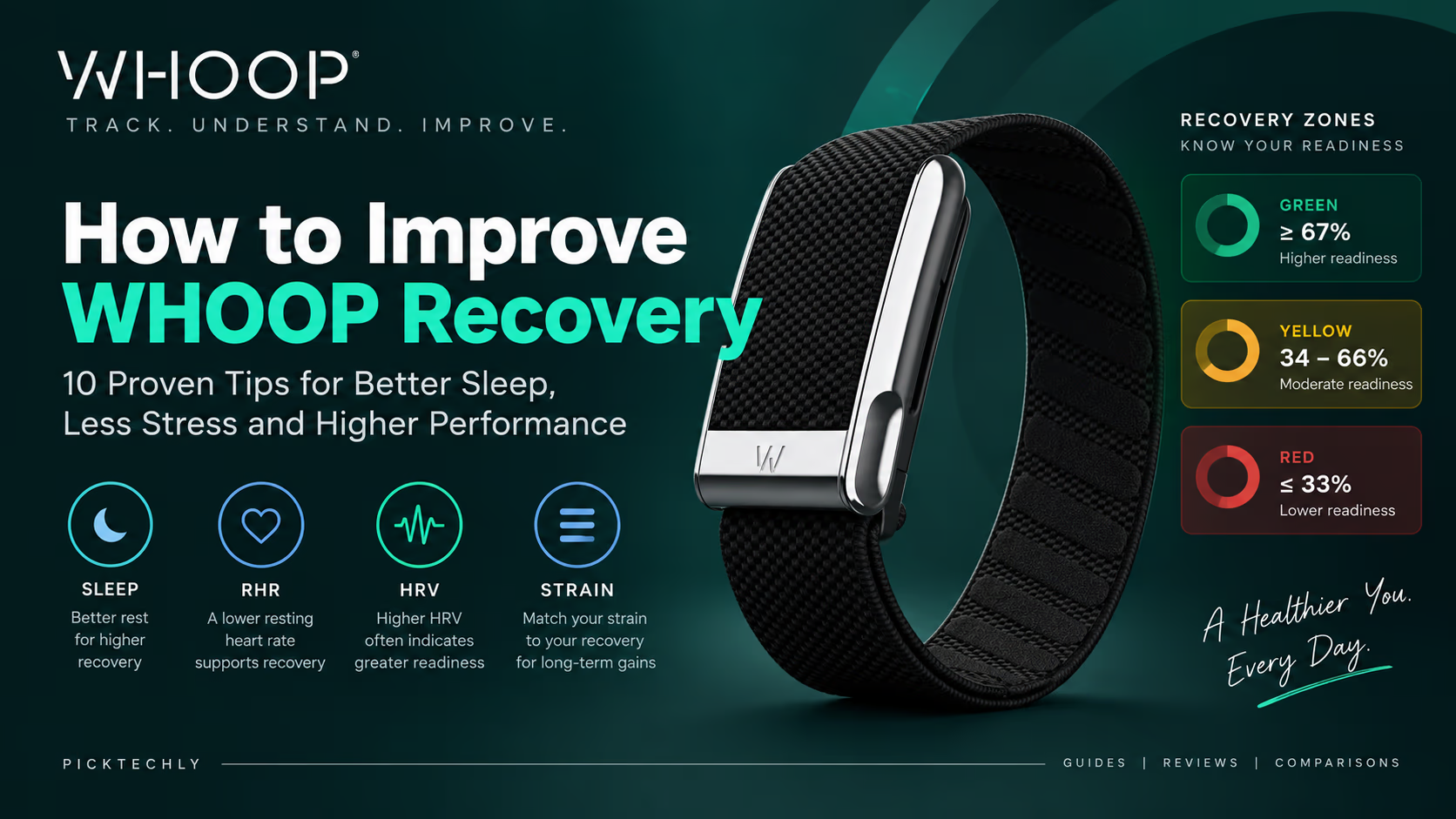
The official Recovery zones are straightforward: Green is 67% or higher, Yellow is 34–66%, and Red is 33% or lower. A Green Recovery suggests your body is well positioned to adapt to more load, Yellow indicates a more moderate state, and Red can signal increased physiological stress.
This is why learning how to improve WHOOP recovery starts with context rather than chasing a single number. A low score can reflect changes in HRV, resting heart rate, respiratory rate, skin temperature, sleep, recent Strain, hydration, alcohol, travel, stress, or a combination of factors.
Keep Your Sleep and Wake Times Consistent
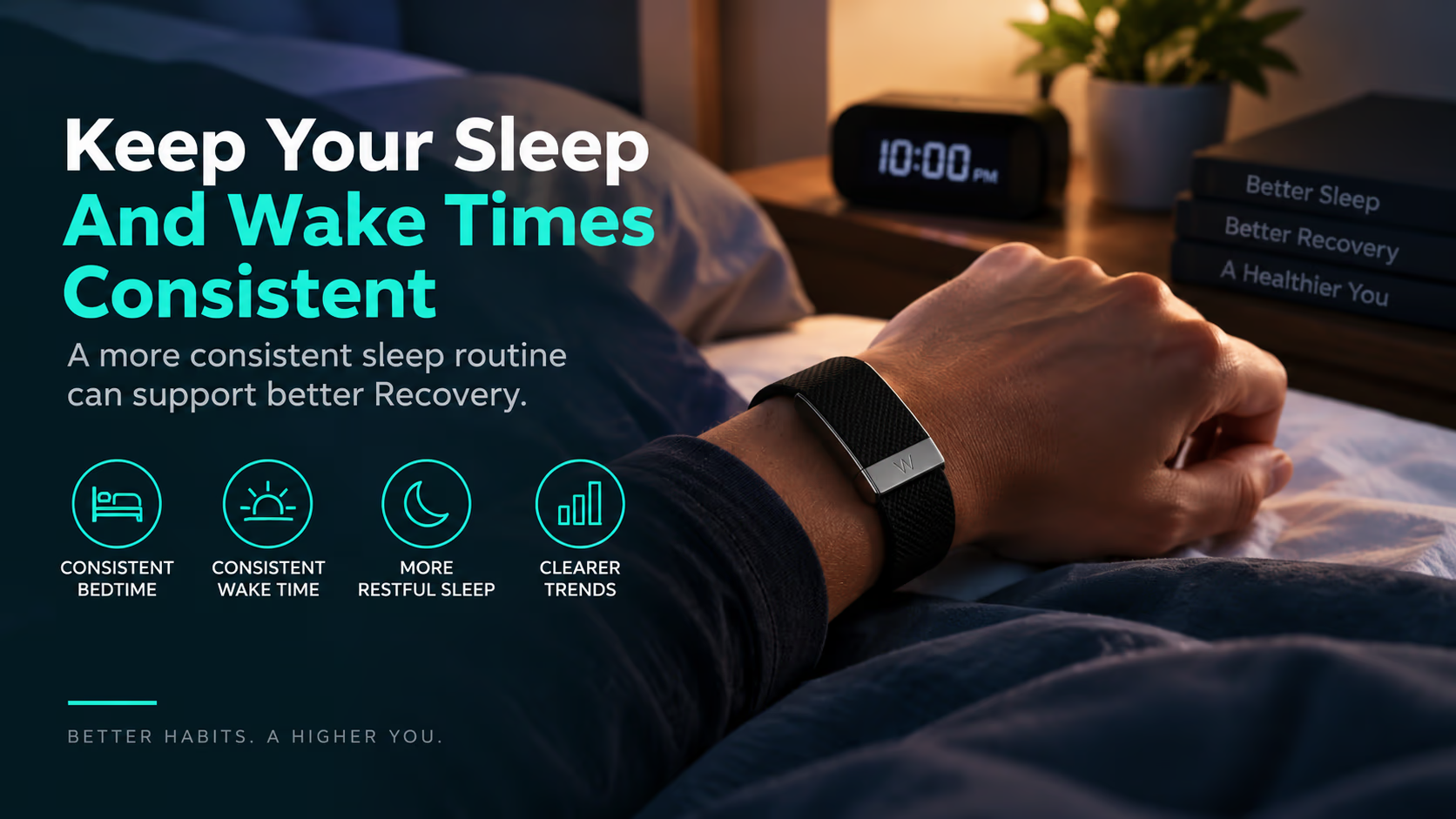
WHOOP explicitly recommends maintaining consistent sleep and wake times when trying to improve Recovery. Regular timing helps you build a more stable sleep routine and gives WHOOP a clearer picture of your overnight physiology from one cycle to the next.
WHOOP also notes that a good night of sleep does not guarantee a high Recovery. If HRV, resting heart rate, respiratory rate, or skin temperature move away from your normal range, Recovery may remain low even when Sleep Performance looks strong.
Hydrate and Fuel Properly
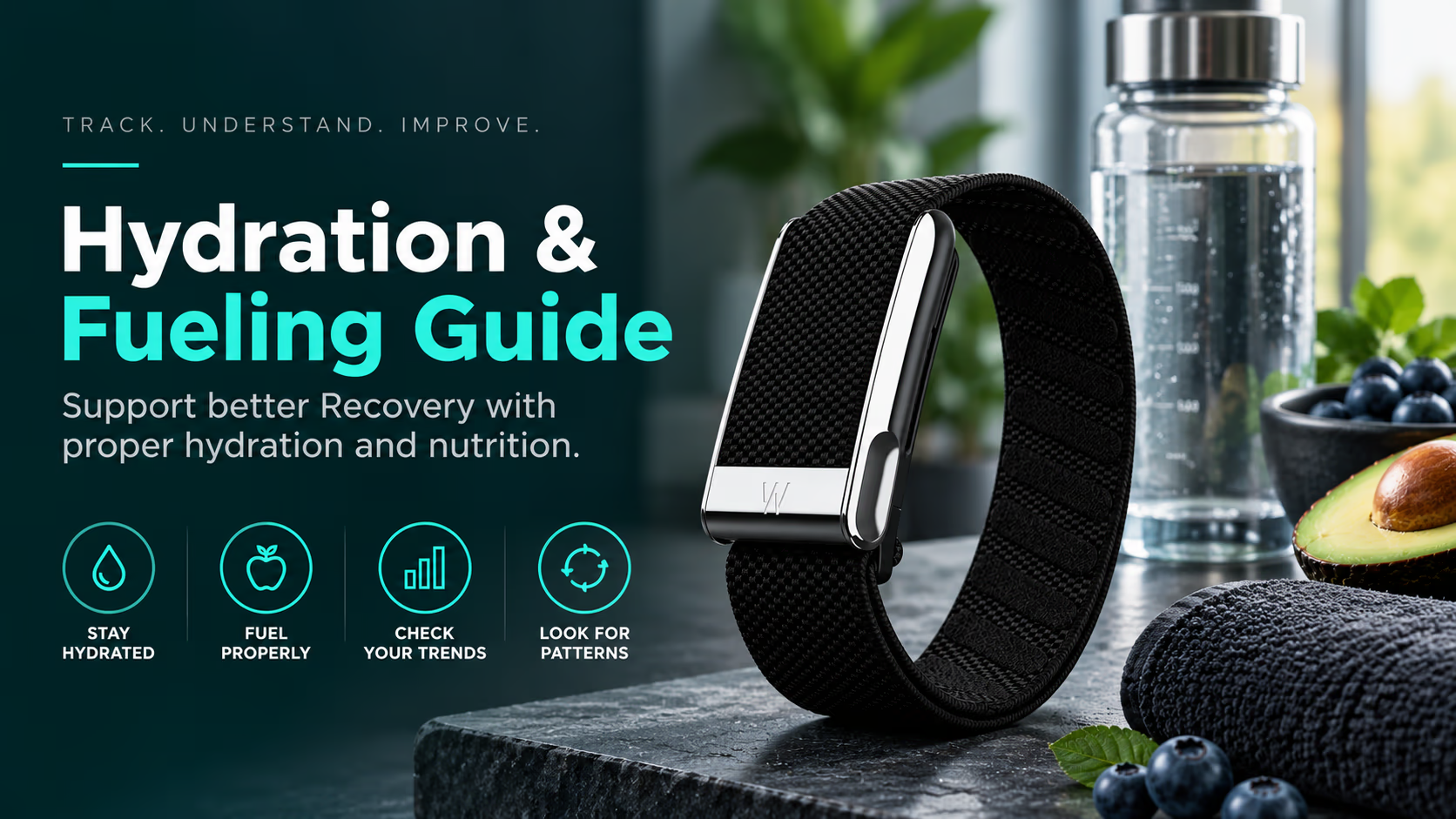
WHOOP lists proper hydration and fueling among its recommended ways to support Recovery. The goal is not to manipulate the score overnight, but to remove avoidable stressors that can interfere with normal recovery from training, travel, heat, illness, or daily life.
Use your WHOOP trends to look for repeatable patterns. If Recovery often falls after long training sessions, travel, or days when hydration and nutrition are poor, those patterns are more useful than comparing your score with someone else’s.
Hydration
WHOOP identifies dehydration as one factor that can contribute to low Recovery even after apparently good sleep.
Fueling
WHOOP recommends fueling properly as part of a broader strategy to support daily Recovery.
Context
Review hydration and fueling alongside recent Strain, travel, stress, and overnight metrics.
Trend First
Use repeated personal patterns rather than expecting a single food or drink choice to guarantee Green Recovery.
Look for repeatable behaviors in your own data
Recovery is personalized. Pair your daily score with the behaviors you log and your recent training load.
- Check Recovery after waking
- Review overnight metrics
- Consider the previous day’s Strain
- Log meaningful behaviors consistently
- Judge patterns over time
The useful question is not “What raises Recovery instantly?” but “Which repeatable habits are associated with better Recovery for me?”
Match Daily Strain to Your Recovery
WHOOP designs Recovery and Strain to be used together. Recovery reflects your readiness to take on stress, while Strain measures cardiovascular and muscular load accumulated across the day. WHOOP’s Strain Target feature provides personalized activity recommendations based on Recovery, Sleep, and training state.
A lower Recovery day does not automatically mean complete rest. It means your current physiological context should influence how aggressively you train. Use Recovery as one input when deciding whether to push, maintain, or reduce your planned load.
Green Recovery
WHOOP says 67%+ indicates your body is primed to adapt to a higher training load.
Yellow Recovery
At 34–66%, WHOOP describes your body as maintaining baseline but potentially more susceptible to fatigue or stress.
Red Recovery
At 33% or below, WHOOP recommends considering lower Strain or prioritizing recovery activities.
Strain Target
Use WHOOP’s personalized Strain Target as a practical guide for the day’s activity load.
Use Recovery as context, not a command
Check Recovery → review sleep and overnight metrics → consider recent Strain → compare with Strain Target → choose an appropriate training load → review the next-day response.
The goal is to align training stress with your current readiness while still looking at the bigger pattern across days and weeks.
Want to Track Recovery, Sleep & Strain?
Explore current WHOOP membership and wearable options through our affiliate partner.
Manage Stress With Breathwork or Meditation
WHOOP specifically recommends stress management practices such as meditation or breathwork as ways to support Recovery. Physiological stress is not limited to exercise, so work, travel, poor sleep, and other daily demands can all affect how your body responds overnight.
Training stress and life stress both contribute to your total physiological context.
Use stress management as a repeatable recovery habit
One meditation session does not guarantee a Green Recovery. The more useful approach is to make the behavior consistent and then examine your personal trend over time.
WHOOP Recovery is not a medical diagnostic tool. Sudden or unexplained changes should be interpreted in context, especially if you also feel unwell.
Use Light Movement Instead of Always Doing Nothing
WHOOP includes active recovery—such as light movement and stretching—among its recommendations for supporting Recovery. On lower-readiness days, that can be a more appropriate option than adding another high-Strain session.
The exact activity should still reflect your circumstances, recent training, and how you feel. WHOOP’s guidance is best used as context for the decision rather than as an automatic prescription.
Light Movement
Easy movement can be used as an active-recovery option when additional hard training is not appropriate.
Stretching
WHOOP specifically names stretching as an example of active recovery.
Watch Strain
Use daily Strain and Strain Target to understand how much physiological load you are accumulating.
Review Tomorrow
Look at the next Recovery to understand how your body responded to the previous day.
Reduce unnecessary load while keeping context
A Red or Yellow score can be a reason to reconsider maximal training stress, especially when other overnight metrics have also shifted.
Active recovery is one option within a larger recovery strategy that also includes sleep, hydration, fueling, stress management, and appropriate training load.
Limit Alcohol When Recovery Matters
WHOOP includes avoiding excess alcohol among its official recommendations for improving Recovery and repeatedly identifies alcohol as a behavior that can negatively affect sleep and overnight recovery-related physiology.
Use your own WHOOP data
- Log alcohol consistentlyUse WHOOP Journal so the behavior can be compared with Recovery over time.
- Check next-morning metricsReview Recovery, HRV, resting heart rate, sleep, and other overnight signals together.
- Look for a repeated effectYour personal pattern is more useful than assuming every person responds identically.
Common interpretation mistakes
- Focusing only on sleep durationWHOOP notes that Recovery can still be low after good sleep when other physiological metrics are affected.
- Judging one nightA single score is less informative than a repeated behavior-and-response pattern.
- Ignoring contextTravel, dehydration, stress, illness, and training load can also influence Recovery.
If improving Recovery is the goal, alcohol is one of the clearest behaviors to track carefully because WHOOP specifically flags it as a potential contributor to lower Recovery.
Use WHOOP Journal to Find What Actually Works for You
WHOOP Recovery Impacts analyzes how daily behaviors, Sleep Performance, and Strain relate to your Recovery. WHOOP says the feature refreshes daily and can quantify whether a Journal behavior is associated with better or worse Recovery after enough yes/no entries have been logged.
Pick Relevant Behaviors
Track habits that you can log consistently and that are meaningful to your routine.
Log Consistently
WHOOP says a behavior needs 5 “yes” and 5 “no” entries within 90 days before Recovery Impact can be shown.
Review Impact
Use the resulting impact to identify behaviors associated with higher or lower Recovery.
Keep Context
Remember that correlation in your behavior data is useful guidance, not proof of a medical cause.
- Sleep consistency
- Alcohol
- Breathwork or meditation
- Hydration-related habits
- Recovery routines
- Look for repeatable patterns
- Compare with recent Strain
- Review overnight metrics
- Avoid overreacting to one day
- Change one meaningful habit at a time when possible
For many WHOOP users, Recovery Impacts is the most practical way to move from generic advice to personalized evidence about which habits appear to help or hurt their own Recovery.
Follow Your Own HRV and Recovery Trends
WHOOP emphasizes personal baselines. HRV varies significantly between individuals, so your own trend is usually more meaningful than comparing your number with another member’s. Recovery should be interpreted the same way: look at what is normal for you and what changes around that baseline.
When Recovery drops, review the full context: HRV, resting heart rate, respiratory rate, skin temperature, Sleep Performance, recent Strain, travel, hydration, alcohol, and stress. This prevents one metric from being treated as the entire explanation.
EXPLORE WHOOP → Affiliate disclosure: PickTechly may earn a commission from qualifying memberships or purchases, at no extra cost to you.What to Do When Your WHOOP Recovery Is Low
A low Recovery does not automatically mean something is wrong. WHOOP says the score can fall because of high Strain, dehydration, alcohol, travel, stress, or changes in overnight physiology even after good sleep. Start by reviewing the details rather than trying to force the score upward.
If a low score is accompanied by unusual changes in respiratory rate, HRV, skin temperature, or how you feel, WHOOP advises monitoring symptoms and seeking healthcare advice when appropriate. WHOOP is not a medical diagnostic tool.