Apple Watch Series 12 vs Galaxy Watch9 : Which Smartwatch Is Better?
Apple Watch Series 12 vs Galaxy Watch9 compares two flagship smartwatches built around health, fitness and connected features. Apple’s Series 12 introduces the S11 chip, an all-new Health Sensing System, higher-frequency heart-rate and HRV measurements, Readiness, a 2,000-nit always-on Retina display and optional 5G cellular connectivity. Samsung’s Galaxy Watch9 counters with a Snapdragon Wear Elite platform, up to a 3,000-nit Super AMOLED display, dual-frequency GPS, Samsung Health wellness insights, 40 mm and 44 mm sizes, and up to 40 hours of use with the always-on display disabled.
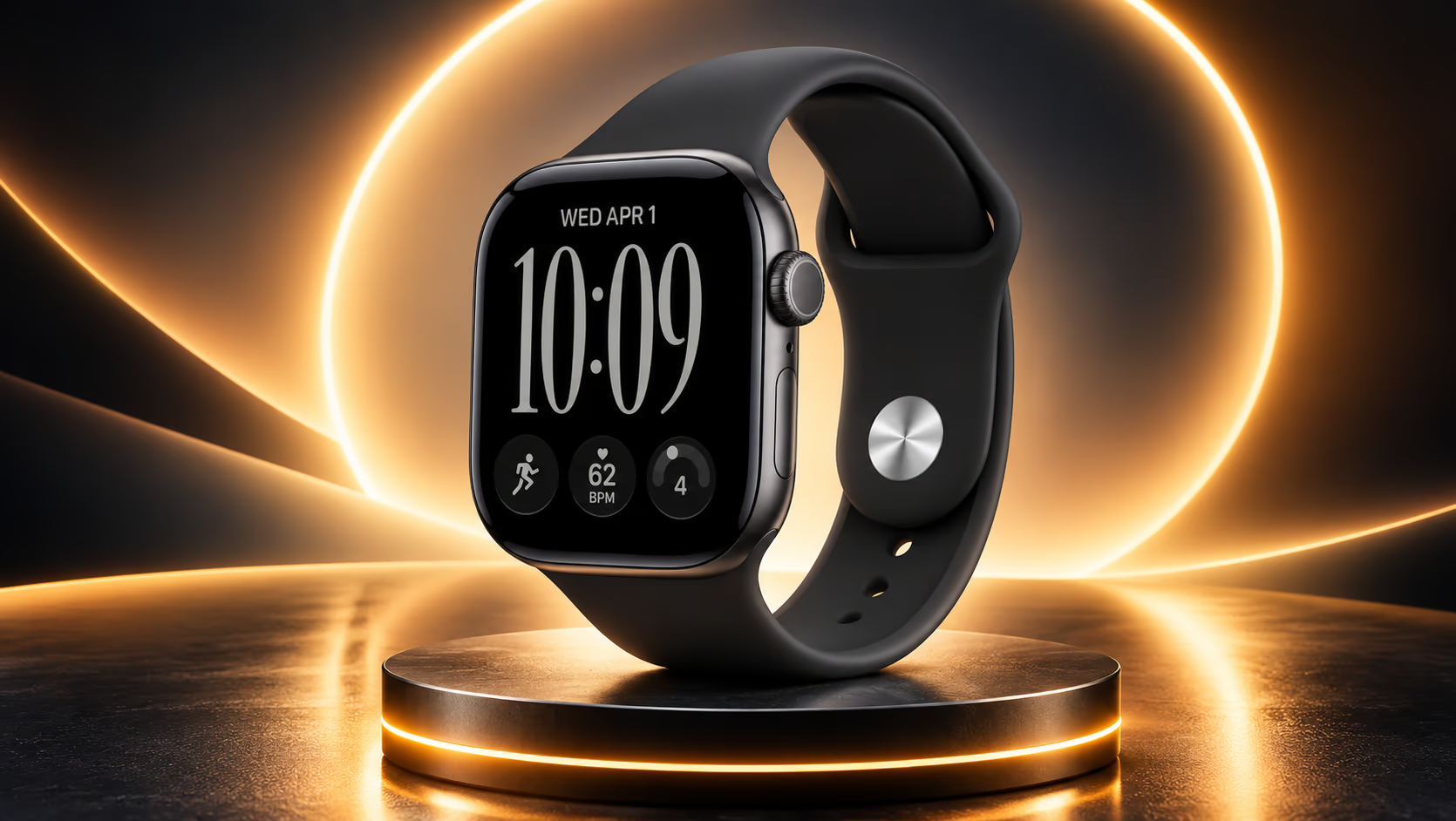
Apple Watch Series 12
42 mm or 46 mm smartwatch with S11 chip, Health Sensing System, always-on LTPO3 OLED display, Readiness, ECG, 64 GB storage, up to 24 hours of normal use and optional 5G cellular connectivity.
CHECK AVAILABILITY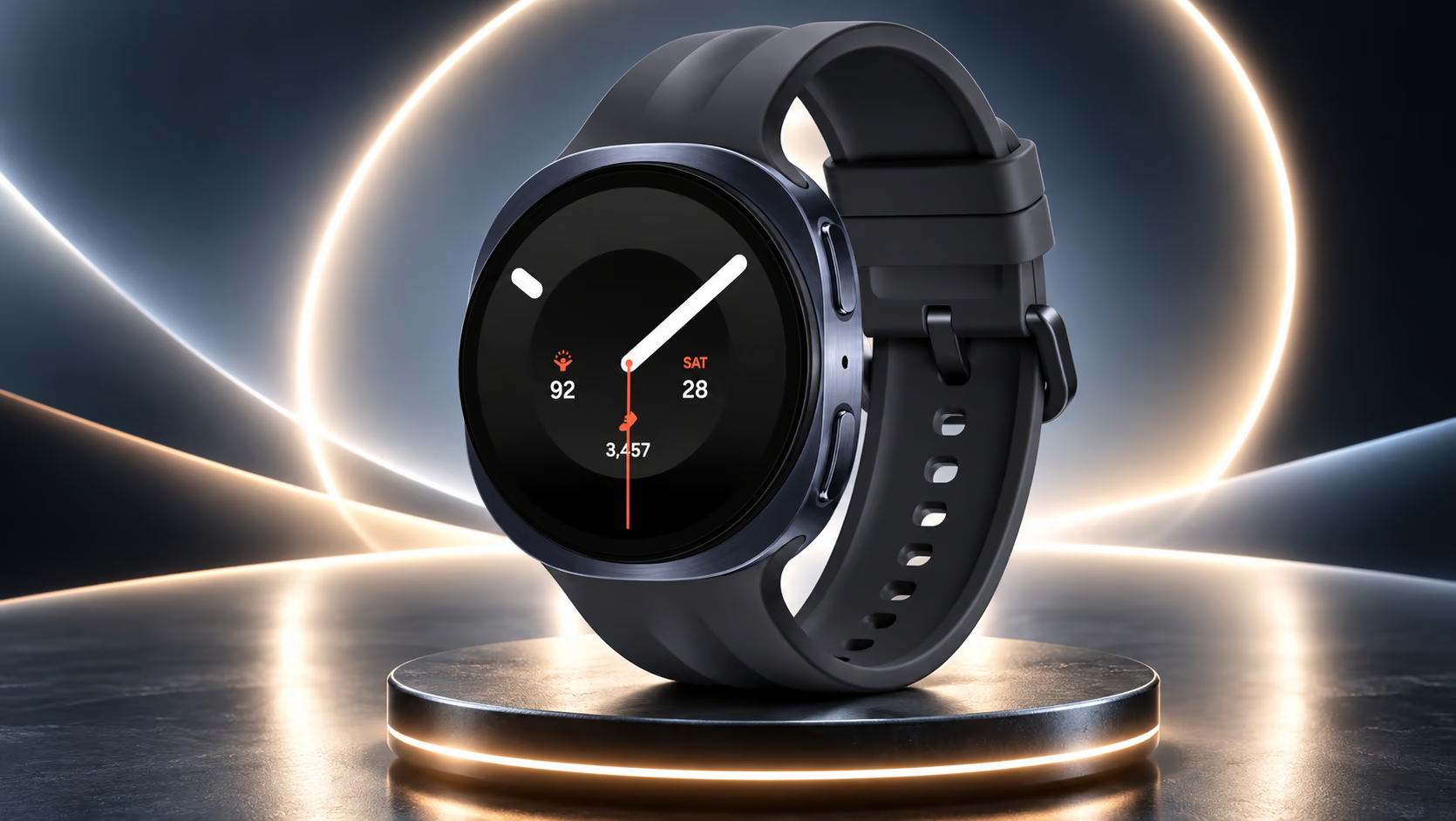
Samsung Galaxy Watch9
40 mm or 44 mm Wear OS smartwatch with Snapdragon Wear Elite, up to a 3,000-nit Super AMOLED display, dual-frequency GPS, Samsung BioActive Sensor, 32 GB storage and up to 40 hours with AOD off.
CHECK AVAILABILITYApple Watch Series 12 vs Galaxy Watch9: Quick Verdict
Best suited to iPhone users seeking Apple’s newest health platform
Series 12 combines the new Health Sensing System, Readiness, high-frequency background heart-rate tracking, Recovery HRV, Apple’s workout tools, 64 GB storage, Apple Pay, Siri AI and optional 5G cellular service.
Best suited to Android users seeking Samsung Health and longer rated use
Galaxy Watch9 combines Samsung’s BioActive Sensor, Energy Score and newer wellness metrics with dual-frequency GPS, Google Gemini, a bright Super AMOLED display and up to 40 hours of use with AOD disabled.
The key distinction is ecosystem. Apple Watch Series 12 requires a compatible iPhone, while Galaxy Watch9 is designed for compatible Android smartphones. Their official health, AI and connected features also depend on software version, region, phone and eligibility.
ON THIS PAGE
Apple Watch Series 12 vs Galaxy Watch9: Comparison Overview
The Apple Watch Series 12 vs Galaxy Watch9 comparison puts Apple’s latest mainstream smartwatch against Samsung’s latest Galaxy Watch. Both provide always-on OLED-class displays, extensive workout tracking, heart and sleep features, GPS, contactless payments and optional cellular configurations, but they are designed around different phone ecosystems.
Apple Watch Series 12 comes in 42 mm and 46 mm sizes and aluminum, titanium or ceramic finishes. Its S11 chip powers Apple’s new Health Sensing System, Readiness and higher-frequency heart-rate and HRV tracking. Apple lists 64 GB of capacity, up to 2,000 nits of peak brightness, up to 24 hours of normal use and up to 10 hours for an outdoor workout.
Galaxy Watch9 comes in 40 mm and 44 mm sizes. Samsung equips it with the Snapdragon Wear Elite platform, 2 GB of memory, 32 GB of storage, sapphire crystal, a Super AMOLED display rated up to 3,000 nits, L1+L5 dual-frequency GPS and 390 mAh or 445 mAh batteries depending on size.
Apple Watch Series 12 vs Galaxy Watch9: Key Specifications
Both families offer two mainstream case sizes. The table uses official manufacturer specifications and shows ranges where specifications differ by size or configuration.
| Feature | Apple Watch Series 12 | Samsung Galaxy Watch9 |
|---|---|---|
| Case sizes | 42 mm or 46 mm | 40 mm or 44 mm |
| Thickness | 9.7 mm aluminum/titanium; 9.85 mm ceramic | 8.6 mm |
| Weight | From 32.2 g (42 mm aluminum GPS); varies by size/material | 31.5 g (40 mm); 34 g (44 mm) |
| Display | Always-On Retina, wide-angle OLED, LTPO3 | Super AMOLED, Full Color Always On Display |
| Resolution | 374 × 446 (42 mm); 416 × 496 (46 mm) | 438 × 438 (40 mm); 480 × 480 (44 mm) |
| Peak brightness | Up to 2,000 nits | Up to 3,000 nits |
| Processor | S11, 64-bit dual-core; 4-core Neural Engine | Snapdragon Wear Elite, penta-core |
| Memory / storage | 64 GB capacity | 2 GB memory / 32 GB storage |
| Water / dust resistance | WR50; IP6X | 5 ATM; IP68; MIL-STD-810H |
| Battery rating | Up to 24 hours normal use; 38 hours Low Power Mode | Up to 40 hours AOD off; up to 30 hours AOD on |
| GPS | Precision L1 GPS | L1+L5 dual-frequency GPS |
| Bluetooth | Bluetooth 5.3 | Bluetooth 6.0 |
| Cellular option | 5G RedCap + LTE on supported models | LTE models available |
| Phone ecosystem | Compatible iPhone required | Compatible Android phone; Android 13+ and >1.5 GB memory per Samsung |
Apple Watch Series 12 vs Galaxy Watch9: Design & Display
Apple retains its rectangular design with 42 mm and 46 mm cases. Aluminum and titanium models are 9.7 mm deep, while ceramic models are 9.85 mm. Series 12 adds Ceramic Shield 2 to aluminum models, while titanium and ceramic versions use sapphire front crystal. The always-on LTPO3 OLED display reaches up to 2,000 nits.
Samsung uses its cushion-inspired Galaxy Watch design with a round display, 8.6 mm profile and sapphire crystal. The 40 mm model has a 1.34-inch 438 × 438 Super AMOLED panel, while the 44 mm version uses a 1.47-inch 480 × 480 panel. Samsung rates both at up to 3,000 nits.
More materials and a rectangular OLED design
- 42 mm and 46 mm sizes
- Aluminum, titanium or ceramic
- 9.7 mm on aluminum/titanium
- Always-on LTPO3 OLED
- Up to 2,000 nits
- Ceramic Shield 2 or sapphire front crystal
Thinner profile with a round Super AMOLED display
- 40 mm and 44 mm sizes
- 8.6 mm profile
- Sapphire crystal
- Super AMOLED always-on display
- Up to 3,000 nits
- 31.5 g or 34 g depending on size
Apple Watch Series 12 vs Galaxy Watch9: Health & Wellness
Apple’s major Series 12 change is the Health Sensing System, combining second-generation electrical heart sensing, always-on optical heart sensing, blood oxygen sensing and temperature sensing. Apple says the new optical system measures heart rate every five seconds throughout the day, while HRV is measured more frequently. Readiness analyzes recent activity, training load, vitals and sleep score to produce a daily 0–10 score.
Samsung’s Galaxy Watch9 uses the Samsung BioActive Sensor for optical bio-signal, electrical heart signal and bioelectrical impedance analysis, alongside a temperature sensor. Samsung Health features include Energy Score, sleep coaching, Running Coach, Vascular Load and Antioxidant Index, while newer Watch9 wellness tools include Vitality, Heart Score, Fitness Index and Cardio Load.
Heart & recovery
Series 12 adds higher-frequency heart-rate and HRV sensing plus Recovery HRV and Readiness. Watch9 combines heart tracking with Heart Score, Energy Score and Samsung Health context.
Sleep
Apple provides sleep stages, Sleep Score and sleep-apnea notifications where available. Samsung combines sleep tracking with Sleep Coaching and overnight data used by several wellness insights.
Body & wellness sensing
Apple lists blood oxygen and temperature sensors. Samsung’s BioActive Sensor includes bioelectrical impedance analysis for body-composition features plus optical and electrical heart sensing.
Daily guidance
Apple centers Series 12 around Readiness and Vitals. Samsung uses Energy Score, Vitality, Fitness Index and Cardio Load to add context to daily wellness and recovery.
Apple Watch Series 12 vs Galaxy Watch9: Fitness & Training
Apple Watch Series 12 supports custom workouts, customizable Workout Views, Training Load, heart-rate zones, VO₂ max, Race Route, Pacer, running power, cadence, stride length, ground-contact time, vertical oscillation, automatic track detection and multisport workouts. Apple also lists cycling, swimming, hiking and a broad set of additional workout types.
Galaxy Watch9 integrates exercise tracking with Samsung Health. Samsung highlights Running Coach, Fitness Index and Cardio Load, with the latter using recent activity and estimated recovery needs to help users balance effort and rest. Dual-frequency GPS is also part of the Watch9 connectivity specification.
Apple emphasizes detailed Workout app metrics; Samsung connects training with wellness guidance
Series 12 provides an extensive list of workout metrics and structured training tools directly in Apple’s Workout experience. Watch9 connects exercise to Samsung Health features such as Running Coach, Fitness Index and Cardio Load.
The practical choice depends heavily on the phone ecosystem you already use and the training metrics you want to see day to day.
Compare Apple Watch Series 12 and Galaxy Watch9 options
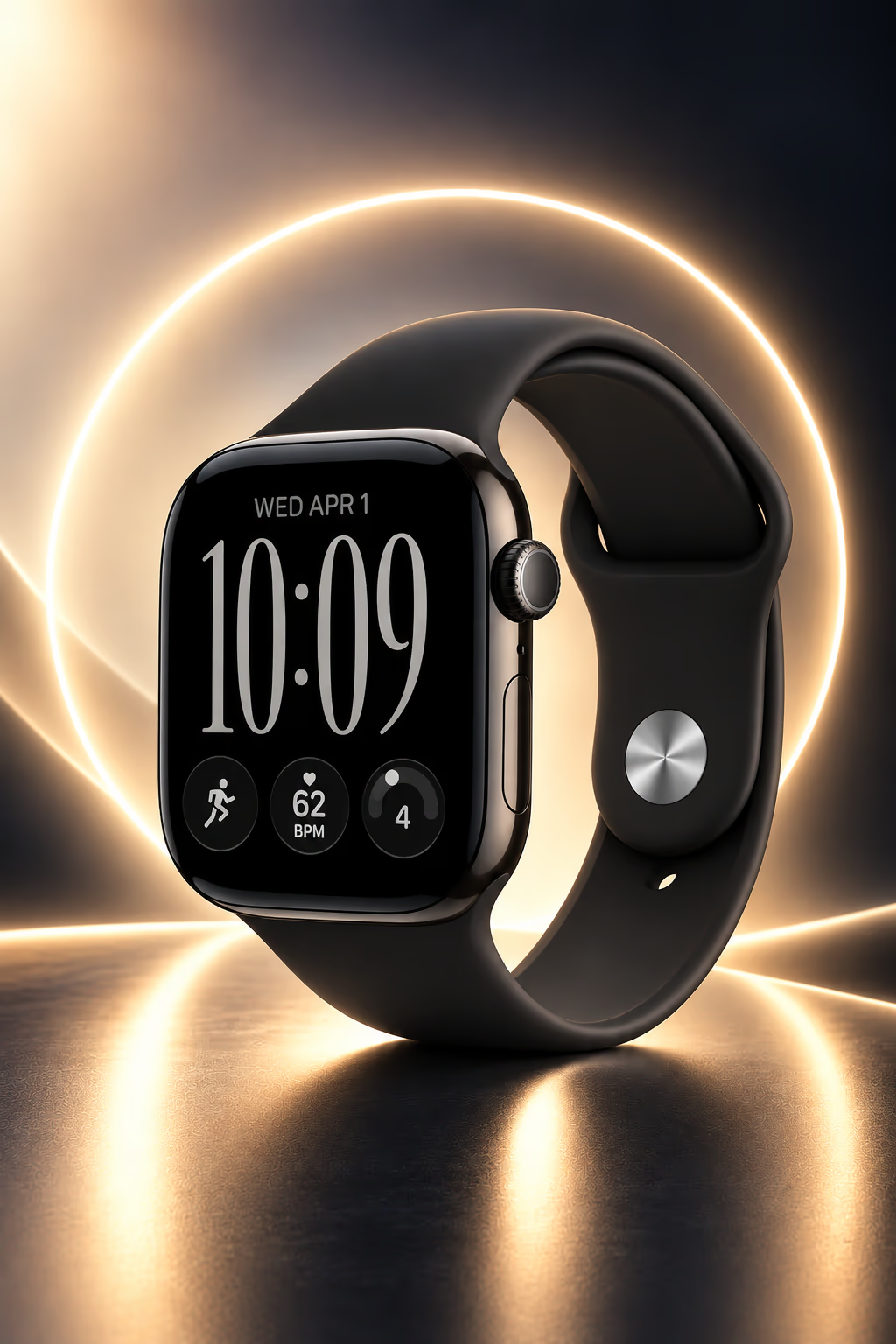
For the Apple ecosystem
- 42 mm or 46 mm cases
- S11 chip and Health Sensing System
- Optional 5G + LTE cellular models
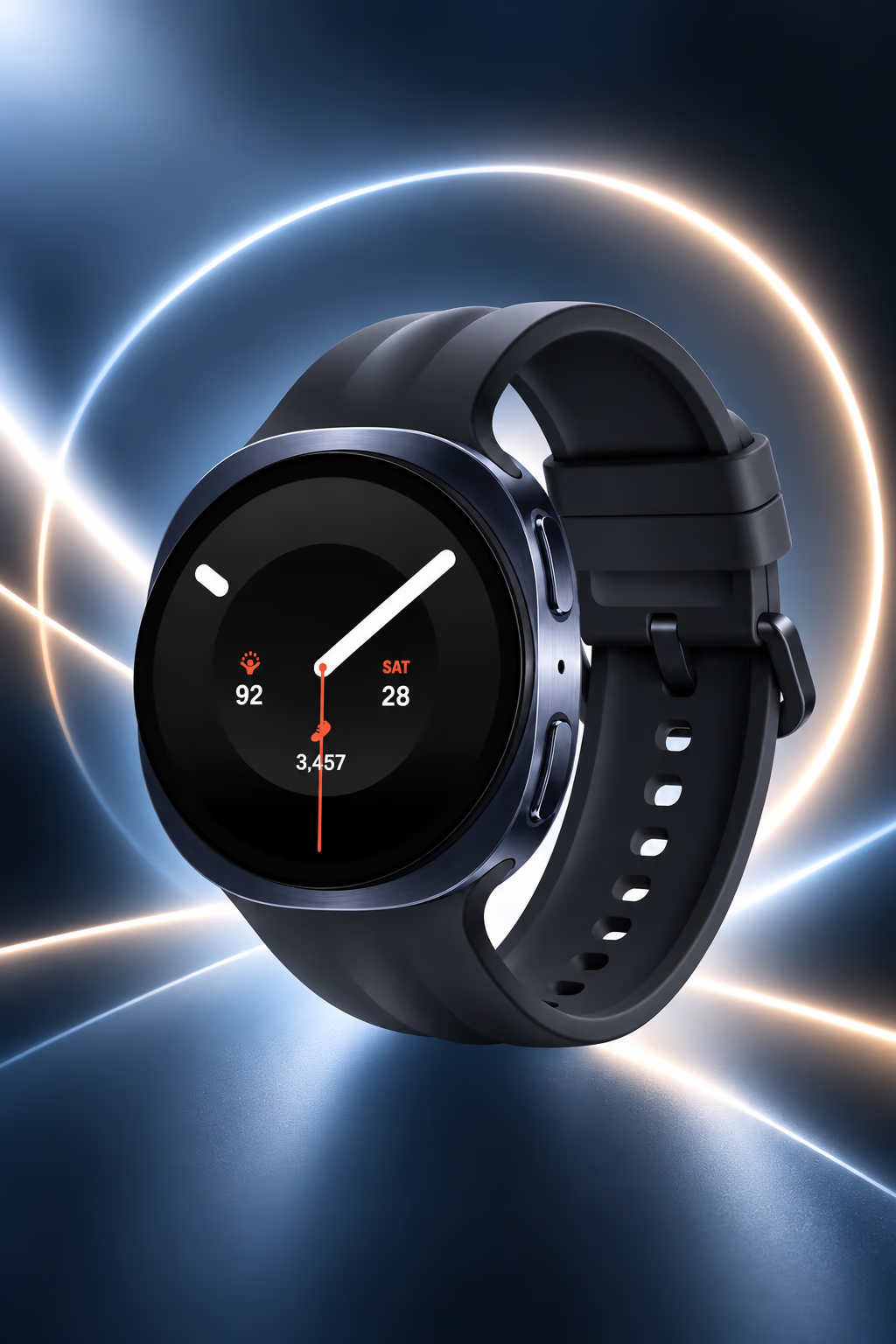
For the Galaxy and Android ecosystem
- 40 mm or 44 mm cases
- Up to 3,000-nit Super AMOLED
- Bluetooth and LTE configurations
Apple Watch Series 12 vs Galaxy Watch9: Battery Life & Charging
Apple rates Series 12 for up to 24 hours of normal use, up to 38 hours in Low Power Mode and up to 10 hours during an outdoor workout. Fast charging reaches up to 80% in about 30 minutes, while 15 minutes can provide up to 12 hours of normal use.
Samsung rates Galaxy Watch9 for up to 40 hours of use with the always-on display disabled and up to 30 hours with AOD enabled on its French 44 mm specification page. Battery capacity is 390 mAh on the 40 mm model and 445 mAh on the 44 mm model.
These figures come from different manufacturer test methodologies, so they should not be treated as identical laboratory comparisons. Actual runtime varies with cellular use, GPS, display settings, workouts, apps and other features.
Up to 24 hours of normal use
- Up to 38 hours in Low Power Mode
- Up to 10 hours outdoor workout
- Up to 80% in about 30 minutes
- 15 minutes for up to 12 hours normal use
Up to 40 hours with AOD off
- Up to 30 hours with AOD on
- 390 mAh on 40 mm
- 445 mAh on 44 mm
- WPC-based wireless fast charging
Manufacturer battery tests use different conditions, so real-world results can vary substantially.
Apple Watch Series 12 vs Galaxy Watch9: Smart Features & Compatibility
Series 12 runs watchOS and uses the S11 chip with a 4-core Neural Engine. Apple lists Siri powered by Apple Intelligence, Audio Intelligence features, Apple Pay, media playback, Wi-Fi, Bluetooth 5.3, a speaker and microphone, 64 GB of capacity and optional 5G/LTE connectivity. A compatible iPhone is required.
Galaxy Watch9 runs Wear OS Powered by Samsung with One UI Watch and integrates Samsung Health, Google services and Gemini. Samsung lists 2 GB of memory, 32 GB of storage, Wi-Fi, NFC, Bluetooth 6.0 and Bluetooth or LTE configurations. Samsung’s global specification requires Android 13 or later and more than 1.5 GB of memory, with compatible devices varying by market and carrier.
Apple ecosystem
- watchOS 27
- Siri AI / Apple Intelligence support
- Apple Pay
- 64 GB capacity
- Wi-Fi 2.4 GHz and 5 GHz
- Optional 5G RedCap + LTE
Samsung + Google ecosystem
- Wear OS Powered by Samsung
- Google Gemini integration
- NFC
- 2 GB RAM / 32 GB storage
- Wi-Fi 2.4 GHz and 5 GHz
- Bluetooth or LTE configurations
Apple Watch Series 12 vs Galaxy Watch9: Which Should You Choose?
Start with phone compatibility. Apple Watch Series 12 belongs to the iPhone ecosystem, while Samsung specifies Galaxy Watch9 for compatible Android smartphones. Once compatibility is settled, compare the health platform, GPS hardware, display, battery estimates and smart features that matter to you.
You use iPhone and want Apple’s latest health and smartwatch features
- You want the new Health Sensing System and Readiness
- You value higher-frequency heart-rate and HRV measurements
- You want 64 GB of capacity
- You want Apple Pay, Siri AI and watchOS apps
- You want optional 5G cellular connectivity
- You prefer Apple’s 42 mm or 46 mm case options
You use Android and want Samsung Health with dual-frequency GPS
- You want L1+L5 dual-frequency GPS
- You value Samsung Health and its wellness scores
- You want a display rated up to 3,000 nits
- You want up to 40 hours with AOD off
- You want Google Gemini on the watch
- You prefer Samsung’s 40 mm or 44 mm sizes
Apple Watch Series 12 vs Galaxy Watch9 FAQ
Which has longer battery life, Apple Watch Series 12 or Galaxy Watch9?
Samsung publishes up to 40 hours for Galaxy Watch9 with AOD off and up to 30 hours with AOD on. Apple publishes up to 24 hours of normal use and up to 38 hours in Low Power Mode for Series 12. These estimates use different manufacturer test conditions.
Which has the brighter display?
Samsung rates Galaxy Watch9 at up to 3,000 nits, while Apple rates Series 12 at up to 2,000 nits. Both use always-on OLED display technology, with Samsung using Super AMOLED and Apple using wide-angle LTPO3 OLED.
Does Apple Watch Series 12 have a readiness score?
Yes. Apple’s Readiness feature analyzes recent activity, training load, vitals and sleep score and provides a daily 0–10 score with guidance.
Does Galaxy Watch9 have dual-frequency GPS?
Yes. Samsung lists L1+L5 dual-frequency GPS for Galaxy Watch9.
Can Apple Watch Series 12 work with Android?
No. Apple Watch Series 12 requires a compatible iPhone and is not designed to pair with Android smartphones.
Can Galaxy Watch9 work with iPhone?
Samsung’s official Galaxy Watch9 specification lists compatibility with Android 13 or later and more than 1.5 GB of memory, with compatible devices varying by market. It is therefore designed for the Android ecosystem rather than iPhone pairing.
Do both watches offer cellular versions?
Yes. Apple offers supported Series 12 models with 5G RedCap and LTE, while Samsung sells Galaxy Watch9 in Bluetooth and LTE configurations. Carrier and regional availability vary.
Apple Watch Series 12 vs Galaxy Watch9: Final Verdict
The Apple Watch Series 12 vs Galaxy Watch9 comparison is first an ecosystem decision. Series 12 is Apple’s newest mainstream watch for iPhone, with the S11 chip, Health Sensing System, Readiness, high-frequency heart-rate tracking, Recovery HRV, 64 GB of capacity and optional 5G connectivity.
Galaxy Watch9 is Samsung’s Android-focused alternative, combining the Snapdragon Wear Elite platform, Samsung BioActive Sensor, Samsung Health wellness guidance, a Super AMOLED display rated up to 3,000 nits, dual-frequency GPS, 32 GB storage and official everyday-use estimates reaching 40 hours with AOD off.
For buyers already committed to either iPhone or Android, compatibility narrows the decision immediately. Within those ecosystems, Apple places particular emphasis on its new sensing and Readiness platform, while Samsung emphasizes wellness guidance, dual-frequency positioning, display brightness and a longer rated everyday-use figure.
Specifications and feature descriptions in this comparison are based exclusively on official Apple and Samsung product pages, technical specifications, support documentation and manufacturer newsroom materials. Health, cellular, AI and wellness features can vary by country, language, phone, carrier, software version and eligibility.
Choose the smartwatch that fits your phone, health goals and daily routine
Series 12 brings Apple’s newest Health Sensing System and connected watchOS experience to iPhone users. Galaxy Watch9 combines Samsung Health, dual-frequency GPS and Wear OS features for compatible Android users.
All specifications and feature claims used in this Apple Watch Series 12 vs Galaxy Watch9 comparison were checked against official Apple and Samsung product pages, technical specifications and manufacturer newsroom documentation.