Screenless Fitness Tracker vs Smartwatch: Which Is Better for Health Tracking?
Is a screenless fitness tracker vs smartwatch the better choice for health tracking? The answer depends less on the presence of a display than on wear consistency, sensors, battery life, GPS needs, health features, app quality, and how you want to interact with your data. This guide compares the two approaches using official manufacturer information from WHOOP, Apple, Garmin, and Oura so you can decide which type of wearable better fits your health and fitness routine.
Is a Screenless Fitness Tracker Better Than a Smartwatch for Health Tracking?
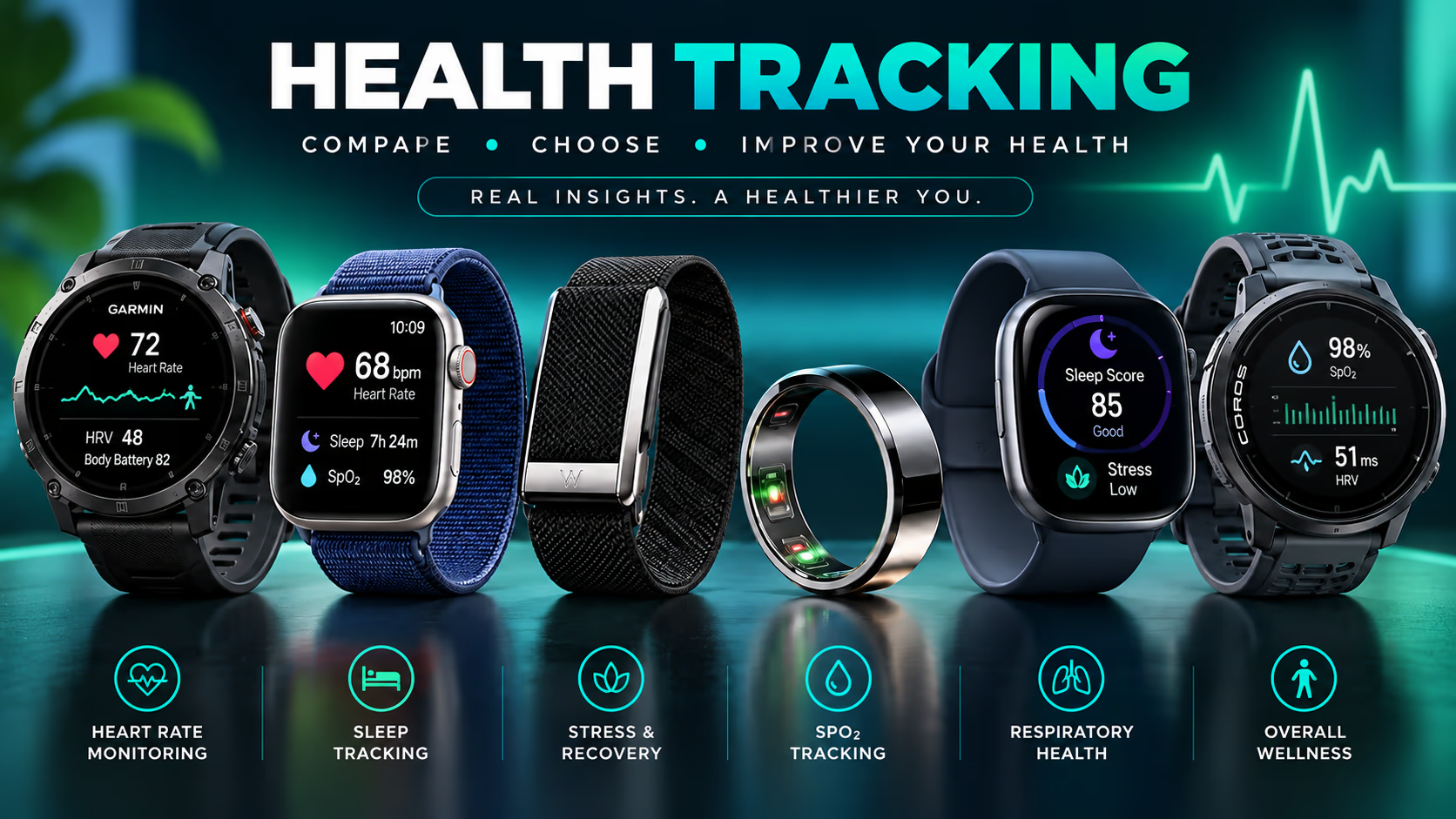
Not automatically. A screenless fitness and health tracker can be better for people who prioritize continuous wear, sleep and recovery tracking, fewer distractions, and low-friction data collection. A smartwatch is usually better when you also want a display, built-in workout controls, live metrics, GPS, maps or navigation, calls, notifications, payments, apps, and safety features. The quality of health tracking ultimately depends on the specific sensors, algorithms, fit, software, and how consistently you wear the device—not simply whether it has a screen.
ON THIS PAGE
What Is a Screenless Fitness and Health Tracker?
A screenless fitness and health tracker collects health, sleep, recovery, and activity data without relying on a traditional watch display for everyday interaction. Instead, most of the detailed information is viewed in a companion phone app. The design goal is usually to keep the wearable on the body while moving attention away from the device itself.
WHOOP is a clear example of this approach. WHOOP describes its current wearable as screen-free, with no notifications, and designed for 24/7 wear. Its official documentation says WHOOP 5.0 provides a 14+ day battery, tracks sleep, strain, recovery, stress and other health metrics, and does not contain built-in GPS. WHOOP official overview and WHOOP Basics.
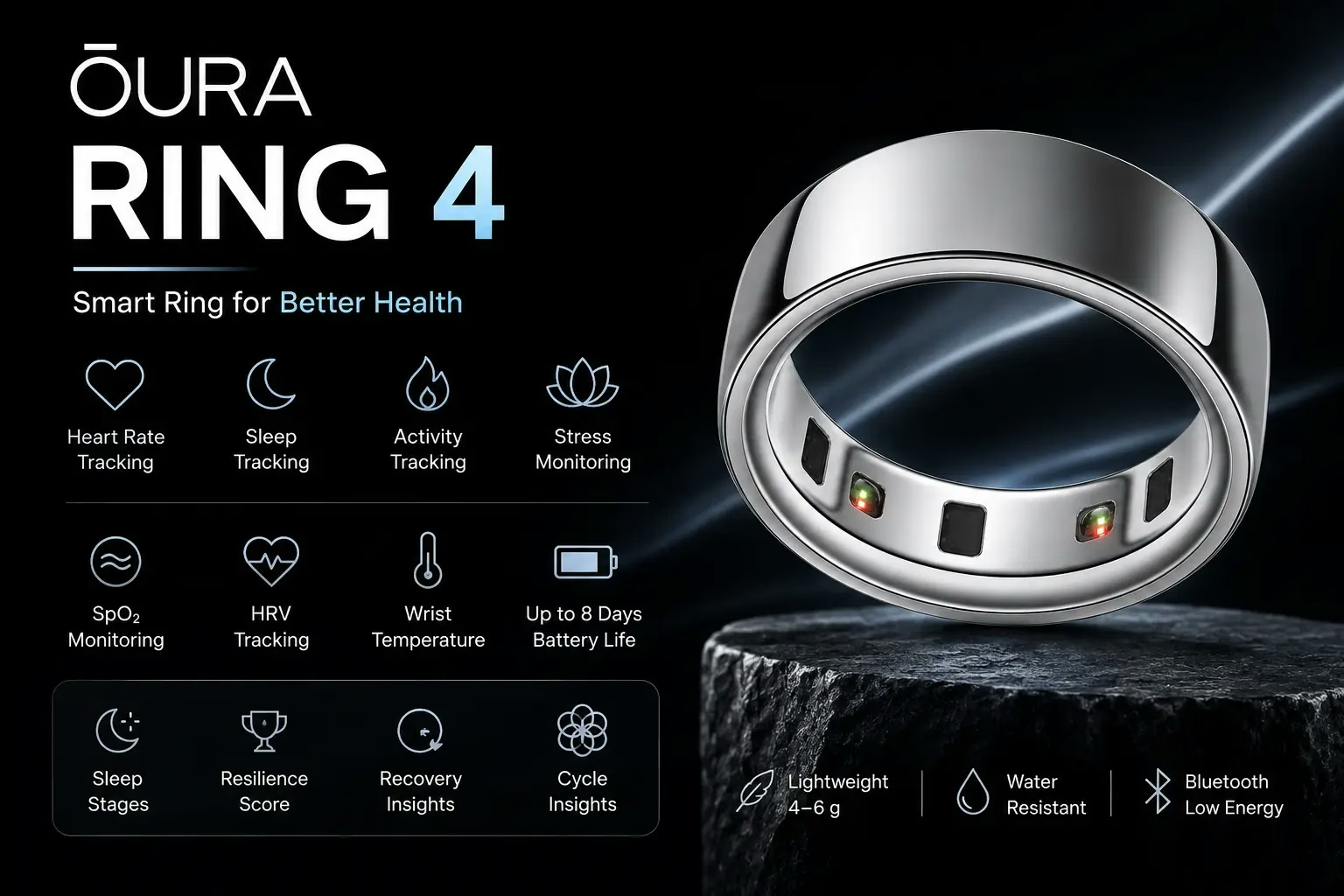
Screenless wearables are not limited to wrist bands. Smart rings follow a similar philosophy because they gather health data without placing a traditional display on your wrist. Oura says the Oura Ring 5 typically lasts 6 to 9 days per charge and is designed around continuous health and sleep data collection. Oura Ring 5 official specifications.
No Traditional Display
Health data is primarily reviewed in the phone app rather than constantly on the wearable.
Passive Data Collection
The device is designed to keep measuring in the background while you work, sleep, and exercise.
Fewer Distractions
No large display means fewer opportunities for notifications, apps, or repeated on-wrist checking.
App-Centered Experience
Scores, trends, coaching, and detailed health analysis are typically delivered through the companion app.
“Screenless” describes the user interface, not the quality of the sensors. A tracker without a display is not automatically more accurate than a smartwatch. Accuracy and usefulness depend on the individual device, sensor placement, algorithms, fit, activity type, and the metric being measured.
Screenless Fitness Tracker vs Smartwatch: The Main Differences
The biggest difference is not simply “screen versus no screen.” It is the philosophy of the device. A screenless tracker usually prioritizes passive monitoring and app-based interpretation. A smartwatch tries to combine health tracking with an interactive computer on your wrist.
Screenless is a usage strategy—not a guarantee of better health data
A screenless device can encourage continuous wear and reduce interaction friction, while a smartwatch can provide a richer set of health, safety, workout, and communication tools. Neither category wins every metric.
Which Type Tracks More Health Data?
A smartwatch can be extremely capable as a health device. Apple lists an electrical heart sensor, third-generation optical heart sensor, blood oxygen sensor, temperature sensor, ECG app, heart-rate notifications, sleep stages, sleep score, sleep apnea notifications, and hypertension notifications on Apple Watch Series 11, subject to regional and eligibility limitations for certain features. Apple Watch Series 11 official specifications.
WHOOP takes a different route. Its current platform emphasizes continuous measurements and interpretation around sleep, strain, recovery, stress, heart rate, HRV, respiratory rate, and other health trends. WHOOP MG adds regulated ECG-related functions in supported regions, while WHOOP 5.0 is focused on the screen-free continuous monitoring experience. WHOOP official feature comparison.
This is why “which tracks more?” is often the wrong question. One device may collect more types of measurements, while another may do a better job of organizing a smaller set of measurements around sleep, recovery, training load, or daily habits. For most buyers, the useful question is: which data will actually influence my decisions?
Heart Rate & HRV
Common building blocks for fitness, stress, sleep, and recovery analysis across modern wearables.
Sleep Data
Both categories can track sleep; comfort and charging habits strongly affect overnight data continuity.
ECG & Regulated Features
Availability depends on the exact device, region, age, software, and regulatory status—not on screen type.
Health Trends
Long-term baselines may matter more than isolated readings when the goal is lifestyle awareness.
Consumer wearables can help you observe patterns and support healthy habits, but they should not be treated as interchangeable with clinical testing. Review the intended use of each health feature and seek medical advice when you have symptoms or health concerns.
Are Screenless Fitness Trackers Better for Sleep and Recovery?
This is where the screenless approach can make the strongest practical case. Sleep tracking depends on the device being on your body overnight. A small, low-interaction wearable with multi-day battery life can reduce the number of times you remove it, charge it, or decide that wearing it to bed is not worth the inconvenience.
WHOOP is explicitly designed around 24/7 wear and puts Sleep and Recovery at the center of the platform. Oura takes a similar app-first approach from the finger, with a screenless ring form factor and multi-day battery. These designs can be attractive for people whose main interest is overnight trends rather than on-wrist apps.
A smartwatch can still be a strong sleep tracker. Apple Watch Series 11 officially supports sleep stages and sleep score, while its battery is rated for up to 24 hours of normal use and fast charging can provide up to eight hours of sleep tracking from a five-minute charge under Apple’s stated test conditions. Apple Watch battery information.
Lower-Friction Overnight Wear
Less screen interaction and longer intervals between charges can make continuous sleep collection easier.
More Functions in One Device
You can combine sleep data with alarms, apps, live metrics, workouts, safety tools, and communication features.
The best sleep tracker is the one you consistently wear to bed
Battery life, comfort, fit, charging routine, and app usefulness can matter more for long-term sleep data than the presence or absence of a display.
Ready to compare specific trackers and smartwatches?
Explore our wearable guides and comparisons to see how individual smartwatches, fitness trackers, and smart rings compare in health tracking, recovery, battery life, fitness features, and everyday use.
Smartwatches Usually Have the Advantage During Workouts
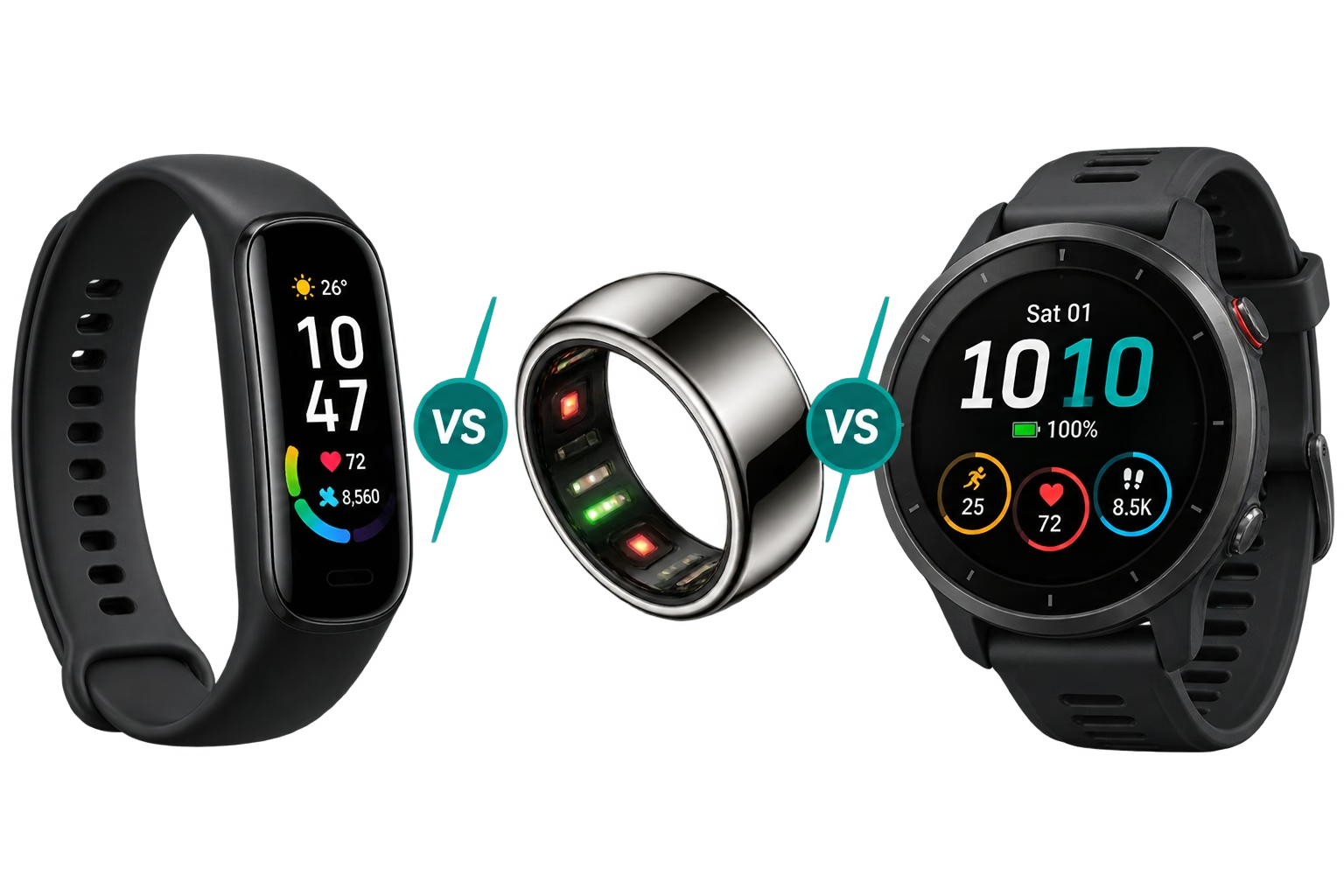
Screenless trackers are often excellent at collecting physiological data in the background, but the lack of a display changes the workout experience. If you want to see pace, elapsed time, heart-rate zones, route information, intervals, or workout prompts while exercising, a smartwatch or sports watch is generally the more practical form factor.
WHOOP’s own support documentation states that the sensor does not have built-in GPS. Distance can be tracked through the WHOOP app, but the wearable itself is not a GPS watch. That is an important limitation for runners and cyclists who want phone-free route recording. WHOOP Basics.
By comparison, Apple Watch Series 11 includes built-in satellite positioning and is designed to show workout data directly on the wrist. Garmin’s Venu 3 is another useful counterexample to the idea that a display necessarily ruins battery life: Garmin officially rates Venu 3 for up to 14 days in smartwatch mode while retaining a color AMOLED display. Garmin Venu 3 official specifications.
Casual Fitness
Either category can work well if your main goal is activity, heart-rate, sleep, and workout logging.
Running & Cycling
A smartwatch or sports watch is usually stronger when live pace, GPS, intervals, and route data matter.
Strength & Recovery
A screenless tracker can appeal when physiological load and recovery trends matter more than on-wrist controls.
Outdoor Navigation
Choose a watch with the specific GPS and navigation capabilities you need; screenless devices are not designed for this role.
Does Screenless Mean Better Battery Life?
Often—but not always. Removing a large always-on display can reduce power demands, but battery life still depends on sensors, processor efficiency, radios, GPS use, software, battery size, and charging design.
WHOOP advertises 14+ day battery life for WHOOP 5.0 and describes the wearable as designed for continuous 24/7 use.
These official figures show why category labels are not enough. WHOOP demonstrates the potential battery advantage of a screen-free design, but Garmin Venu 3 shows that a smartwatch with a display can also reach multi-day endurance. Apple Watch Series 11 prioritizes a different mix of display, apps, connectivity, safety, and smart features, with a much shorter stated battery interval.
For health tracking, battery life matters because every charging session creates the possibility of missing sleep, workouts, resting heart-rate data, or other trends. The relevant question is not “which number is biggest?” but “which charging routine can I realistically maintain?”
Does Removing the Display Improve Health Tracking?
Removing the display does not improve a heart-rate sensor by itself, but it can change how you use the device. WHOOP explicitly markets its screen-free design around “zero distractions,” with no pings or notifications. For users who already spend too much time checking screens, this can be a meaningful ergonomic advantage.
A smartwatch display has the opposite strength: immediacy. You can see heart rate during exercise, review a notification, start an interval, check a timer, view a map, use a payment card, or respond to an alert without taking out your phone. The display is therefore not merely decoration—it changes the role of the wearable.
You Want Data Without Another Screen
Best when passive tracking, recovery trends, sleep, and low distraction are central priorities.
You Want Health Data in Real Time
Best when live workout information, navigation, alerts, apps, and interaction matter throughout the day.
Do Not Compare the Hardware Without Comparing the Ecosystem
With screenless trackers, the companion app is especially important because it becomes the main interface. A beautifully designed sensor is much less useful if the app does not explain your trends in a way you understand or if the metrics you care about sit behind a recurring membership you do not want to maintain.
WHOOP’s current model is membership-centered: the wearable, app, 24/7 monitoring, and feature tiers are tied to its membership structure. This is fundamentally different from buying a smartwatch such as Apple Watch or Garmin Venu 3, where the hardware purchase is the central transaction and optional third-party subscriptions are separate. WHOOP membership options.
Oura also uses a membership model for access to its broader software experience. Before buying any screenless health tracker, calculate the total cost over the period you realistically expect to use it. A lower-friction wearable is not necessarily a lower-cost wearable.
What do you pay upfront?
Compare the device, charger, band or sizing accessories, and any model-specific extras.
Is a membership required?
Check which insights, coaching tools, or historical features depend on an ongoing subscription.
Will you use the app?
The software experience matters more when there is no display to provide detailed information on the device.
Who Should Buy a Screenless Fitness Tracker vs a Smartwatch?
Choose a screenless tracker for passive 24/7 health tracking
It makes sense if sleep, recovery, physiological trends, comfort, and low distraction matter more than live on-wrist controls.
Choose a smartwatch for fitness plus everyday technology
A smartwatch is stronger when you want health tracking together with GPS, apps, calls, notifications, payments, timers, music, maps, safety features, or live workout screens.
Choose screenless if notifications are part of the problem
If you deliberately want less technology demanding your attention, removing the screen can be a feature rather than a limitation.
Choose a smartwatch if you train by real-time feedback
Runners, cyclists, hikers, and interval-focused athletes often benefit from seeing pace, heart rate, time, route, and workout prompts directly on the wrist.
Do not choose based on battery alone
WHOOP offers 14+ day battery, but Garmin Venu 3 is also rated for up to 14 days in smartwatch mode. Compare the entire device, not one specification.
Screenless Fitness Tracker vs Smartwatch: 10 Questions Before You Buy
If you are still deciding between a screenless fitness tracker and a smartwatch, answer these questions based on your actual routine. The category that wins the most important questions for you is usually the better purchase.
The category does not determine the result. WHOOP and Oura illustrate the strengths of screenless continuous tracking, while Apple Watch and Garmin show how much health, fitness, GPS, and smart functionality can be integrated into a device with a display. Always compare specific models.
Screenless Fitness Tracker vs Smartwatch: Frequently Asked Questions
Is a fitness band without a display better than a smartwatch for tracking health?
Not inherently. A screenless band can be better for continuous wear, sleep, recovery, and low-distraction tracking, while a smartwatch can offer equally serious health sensors plus live workout data, GPS, apps, notifications, and safety features. Compare the specific devices rather than assuming no display means better data.
What is the advantage of a screenless fitness tracker?
The main advantages are passive data collection, fewer distractions, and a design that can encourage continuous wear. Some screenless devices also offer long battery life, although this varies by model.
Are screenless fitness trackers more accurate?
There is no general rule that makes a screenless tracker more accurate. Sensor quality, placement, fit, algorithms, activity type, skin contact, and the metric being measured all matter. The absence of a display does not itself improve sensor accuracy.
Are screenless trackers better for sleep tracking?
They can be easier to use consistently overnight because they are often designed around passive wear and multi-day battery life. A smartwatch can still track sleep well if it is comfortable and your charging routine allows you to wear it through the night.
Do screenless fitness trackers have GPS?
It depends on the product. WHOOP, for example, officially states that its sensor does not have built-in GPS. If phone-free route recording is important, verify built-in GPS before choosing a screenless tracker.
Does a smartwatch always have worse battery life?
No. Apple Watch Series 11 is rated for up to 24 hours of normal use, but Garmin Venu 3 is rated for up to 14 days in smartwatch mode. Battery performance varies significantly between smartwatch platforms.
Is WHOOP a smartwatch?
No. WHOOP describes its current wearable as screen-free and intentionally without a traditional watch face or notifications. It is designed around continuous health, sleep, strain, and recovery monitoring through the WHOOP app.
Who should choose a smartwatch instead of a screenless health tracker?
Choose a smartwatch if you want health tracking plus an interactive display, live workout metrics, built-in GPS, apps, calls, notifications, music, payments, timers, navigation, or other on-wrist functions.
Screenless Fitness Tracker vs Smartwatch: Which Is Better?
For pure low-friction health, sleep, and recovery tracking, a screenless fitness and health tracker can be the better design. Devices such as WHOOP are built around continuous wear, app-based interpretation, and minimal distraction rather than on-wrist interaction.
For the broader combination of health tracking, workouts, GPS, real-time information, safety, apps, and everyday smart features, a smartwatch is usually more versatile. Modern watches can offer advanced health sensors without forcing you to give up GPS, displays, communication features, or multi-day battery life in every case.
The most important conclusion is that a screenless tracker is not automatically more accurate. Its strongest advantage is behavioral: fewer distractions and, on some models, a design that makes continuous wear easier. A smartwatch’s strongest advantage is interaction: it turns the wearable into both a health sensor and an active tool you can use throughout the day.
Choose screenless for passive tracking. Choose a smartwatch for active interaction.
If sleep, recovery, health trends, and distraction-free 24/7 wear are your priorities, screenless deserves a serious look. If live workouts, GPS, apps, safety, communication, and on-wrist data matter just as much, a smartwatch is the more complete choice.